
Disclosure: This page contains affiliate links. If you purchase through them, we may earn a commission at no extra cost to you.
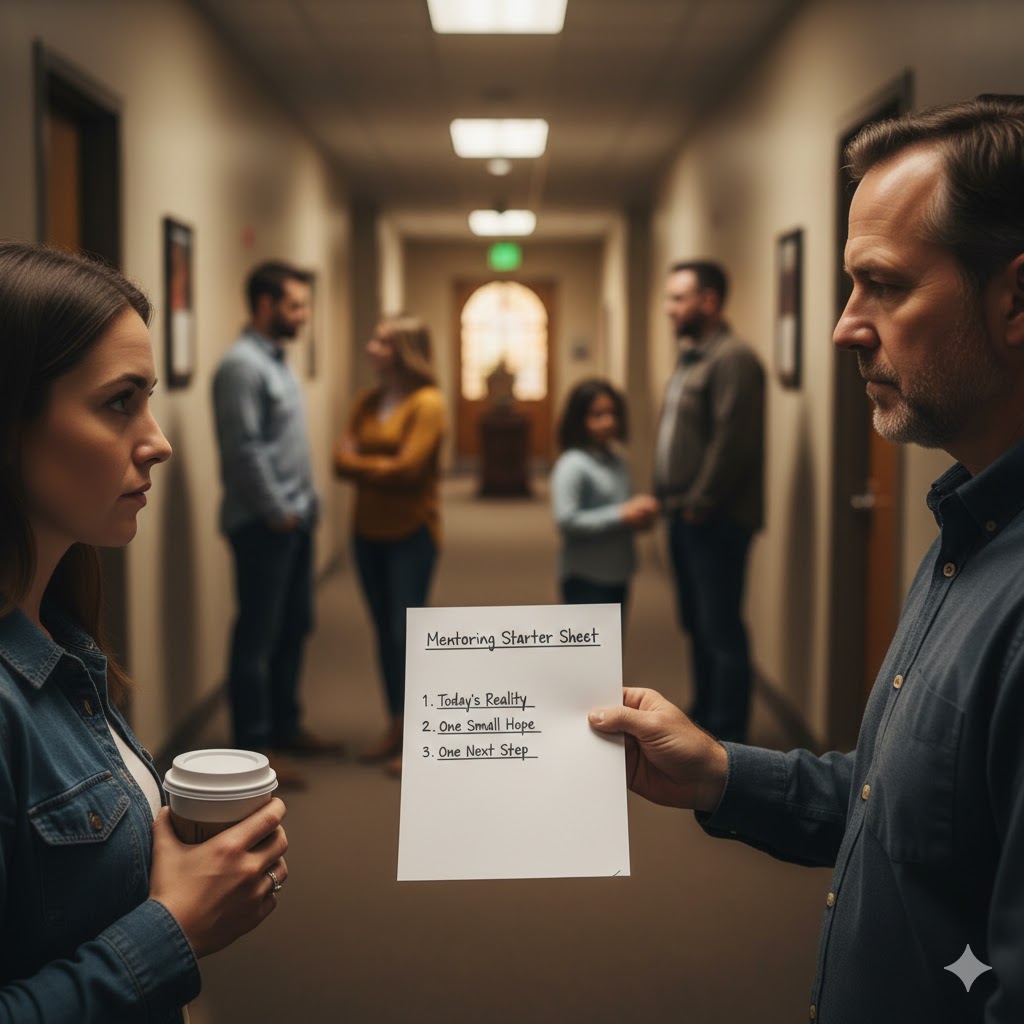
On a Wednesday night in a church hallway, you see it.
A husband and wife stand a few feet apart, talking to different people, never touching, never catching each other’s eye. Their kids orbit them like small moons, pulling at sleeves, asking questions, going mostly unanswered.
You’ve seen this couple before. They used to sit close. Now they arrive late, leave early, and vanish between Sundays.
Most people notice. Almost nobody acts.
The assumption is simple and deadly:
“It’s not my place. I’m not a counselor. If they really needed help, they’d ask.”
Meanwhile, divorce lawyers are happy to step into the silence.
What if you became the person who refused to let that happen?
The Lie: “Only Professionals Save Marriages”
One of the great lies that keeps divorce rates high is the belief that only professionals can help save marriages:
- “I’m not a therapist.”
- “I don’t want to say the wrong thing.”
- “We don’t have a formal marriage ministry yet.”
So churches, families, and communities become places where:
- Couples collapse in private while everyone else makes small talk.
- Youth watch marriages die without ever seeing them fought for.
- The first serious conversation about the marriage happens after a lawyer is already hired.
But that is not how God designed His people to live.
Scripture assumes that ordinary believers will:
- Bear one another’s burdens.
- Admonish one another.
- Encourage one another daily, lest hearts be hardened.
The question is not whether you are a professional. The question is whether you are willing to be a friend who loves enough to act.
Seeing the Warning Signs (Through a Mentor’s Eyes)
Start noticing the small, repeating patterns that often precede divorce:
- The couple that always jokes about divorce, “trading up,” or being “stuck.”
- The spouse who begins attending alone more often.
- The sudden disappearance from small groups, prayer meetings, or family dinners.
- The wife who starts making self-protecting comments: “I’m just trying not to rock the boat.”
- The husband who withdraws into work, hobbies, or screens and jokes about feeling “safer that way.”
You are not paranoid for seeing these patterns. You are being faithful.
A Simple First Step: The Courageous Check-In
You don’t need a degree to ask a better question. You only need courage.
Here is a simple script you can adapt:
> “Hey, I’ve noticed you both seem more distant lately. I may be wrong, but I > care about your marriage and your family. If things are heavy, I’d be > honored to listen and pray with you, or help you find support. You don’t > have to walk through this alone.”
If they brush it off, you have still:
- Planted a seed that someone sees them.
- Made yourself a safe, available person if crisis hits.
If they open up even a little, resist the urge to:
- choose sides,
- offer quick fixes,
- or promise more than you can deliver.
Instead, use three questions:
- “What hurts most right now?”
- “What do you wish your spouse understood about you?”
- “What would ‘one small sign of hope’ look like in the next week or two?”
Write those answers down (with their permission). You now have a starting map for real mentoring.
A Reusable Tool: The One-Page Mentoring Starter
Here is a one-page framework you can reuse with any couple or individual. Print it. Screenshot it. Handwrite it on a notepad.
Mentoring Starter Sheet
1. Today’s Reality (No Spin)
- What’s actually happening at home?
- How are you talking (or not talking)?
- Where do you feel like you’re walking on eggshells?
2. One Small Hope
- If things were 5% better in the next two weeks, what would be different?
- What is one scene you wish you could see at home?
3. One Next Step
- What is one small, non-desperate action you can take this week to move
toward that scene? (A note, an apology, a shared coffee, a counseling appointment, a boundary around phones at dinner.)
End the conversation by praying specifically over those answers. Then set a short follow-up:
“Can we check in again next week for 20 minutes to see how this went?”
You have just done more to save a marriage than a thousand generic “marriage advice” posts.
Disrupting the Passive Assumptions
Every time you step in like this, you are attacking four deadly assumptions:
- “It’s not my place.”
Loving confrontation is your place when vows and children are at stake.
- “They’ll ask if they really want help.”
People drowning in shame rarely raise their hand first. Rescuers jump in.
- “If it gets really bad, the professionals will handle it.”
By the time lawyers and courts are the main voices, the damage is multiplied. Early mentoring buys time and hope.
- “We don’t have a formal program yet.”
Movements start with one or two people who say, “Not on my watch.”
What You Can Do This Week
You don’t need a new committee. You need a new habit.
Here are 5 concrete actions you can take this week:
- Pick one couple to check on.
Ask the courageous question. Use the three follow-up questions if they open up.
- Share the Mentoring Starter Sheet.
Print or message it to one pastor, small group leader, or trusted friend and say, “I think we could use this here.”
- Pray by name for at least two marriages.
Not vague prayers—specific petitions for repentance, courage, and reconnection.
- Start a tiny “marriage watch” list.
Quietly note 3–5 couples who might be drifting. Commit to greet them, notice them, and be available.
- Ask your pastor one disruptive question.
“What would it take for our church to be known as a place where marriages are fought for, not just buried? How can I help?”
You do not have to be a professional to be a catalyst. You only have to love marriages enough to refuse silence.
The lawyers and judges will still be there if we fail. Let’s give them less work to do.
Leave a Reply
You must be logged in to post a comment.